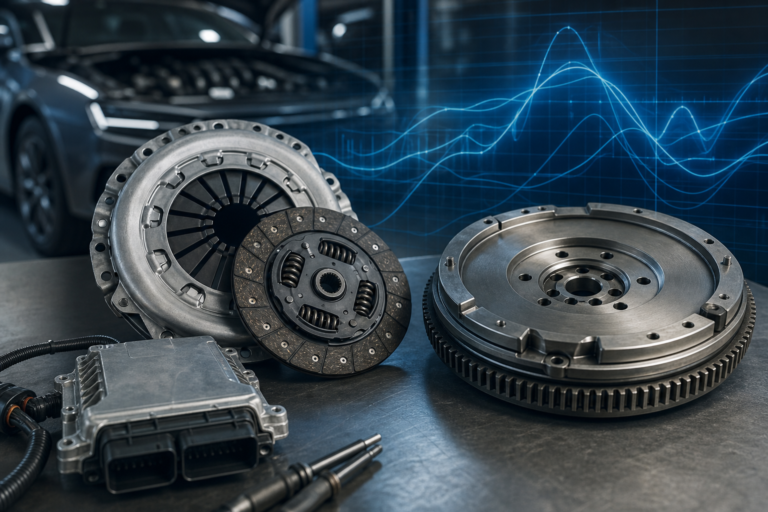
Being told that a remap cannot go ahead on the day can be frustrating, but it is often useful information. The decision is not necessarily a verdict that the vehicle cannot ever be tuned. It may mean there is something to clarify, repair or stabilise first.
Why a remap may be refused after diagnostics is usually less about a single fault code and more about whether the vehicle presents a clear, dependable starting point for calibration and ECU programming. A remap is not a substitute for diagnosing an existing running, electrical or communication concern.
A declined remap can be a pause rather than a permanent no
There are several possible outcomes from a pre-remap assessment:
- the vehicle appears ready and the remap can be discussed or completed;
- a minor issue needs attention before programming;
- further diagnostic or mechanical investigation is needed; or
- the tuner decides that calibration is not the right next step for that vehicle.
The important distinction is between an observation and a confirmed diagnosis. A warning light, unusual symptom or stored code can justify postponing a remap, but it does not by itself prove the cause. Further testing or repair may be needed to establish that.
Active warning lights and relevant fault codes
An engine-management, drivetrain or other relevant dashboard warning should be understood before changing the engine calibration. Diagnostic equipment can identify stored and current information, but the meaning of that information depends on the vehicle, the system involved, any symptoms and whether the issue returns.
A tuner may postpone work where a finding could affect how the engine runs, the accuracy of available data or the reliability of the programming process. This avoids treating software calibration as a way to hide an unresolved problem.
Clearing a code is not the same as correcting its cause. If a warning returns, the vehicle behaves abnormally or supporting checks raise further questions, investigation is generally the more useful next step.
MOT concerns are separate from a remapping decision
An MOT result does not automatically determine whether a tuner will accept or decline a remap. However, it can be relevant background where it identifies an engine warning lamp, emissions issue or visible problem with emissions-control equipment.
The current MOT inspection manual requires inspection of the engine malfunction indicator lamp on specified petrol and diesel vehicles. It also treats manufacturer-fitted emissions-control equipment that is missing, obviously modified or obviously defective as a major defect in the circumstances set out in the manual. A vehicle with an engine modified in any way must still meet the applicable exhaust-emissions requirements for its age. Read the current GOV.UK MOT inspection guidance.
That is an MOT inspection matter, not a rule that every warning light requires a remap refusal. It does reinforce the practical point: a relevant warning or emissions concern deserves proper attention before calibration is considered.
Mechanical symptoms that need attention first
Calibration works with the vehicle as it is presented. If there are signs of an underlying mechanical or running issue, adding further performance demand may not be the sensible first move.
Examples that may justify a pause include:
- loss of power, hesitation or uneven running;
- unusual engine, induction or transmission noises;
- fluid loss, overheating or an unexplained temperature concern;
- smoke that is unusual for the vehicle;
- clutch slip, inconsistent gear changes or drivetrain symptoms; and
- a known fault that has returned after earlier work.
None of these symptoms identifies a failed component on its own. They are reasons to investigate condition before deciding whether remapping is appropriate. The right next step may be targeted diagnosis, routine repair, servicing or specialist advice, depending on the vehicle and the evidence available.
Electrical condition and programming readiness
ECU reading and writing is a programming task, so a tuner needs confidence that the vehicle is in a suitable electrical state for the method being used. If battery voltage or the vehicle’s electrical behaviour appears uncertain, postponing the work may be the prudent option.
This is a programming-readiness issue, not necessarily proof that the battery has failed. The appropriate approach can vary by vehicle, ECU and access method. A check may therefore lead to a recommendation for a battery or charging-system assessment before another remap appointment is arranged.
ECU identification or communication is not sufficiently clear
Before software can be read or written, the ECU must be identified and accessed using an appropriate route. Sometimes the expected communication is not available or does not provide enough confidence to proceed on that visit.
This can happen where there is uncertainty around the ECU’s software history, a replacement control unit, previous repair work, prior tuning or the communication seen during initial checks. These circumstances do not automatically rule out remapping. They can simply mean that the vehicle needs further assessment before anyone attempts programming.
It is useful to tell the tuner about previous tuning, ECU replacement, recent electrical work and recurring faults. Even incomplete history can help avoid assumptions and inform the next check.
What RCR REMAPS checks before deciding whether to proceed
RCR REMAPS states that it diagnoses vehicles before remapping to identify significant faults that could interfere with tuning or ECU writing. Where appropriate, original ECU data is read and written using genuine tools including Autotuner, Kess V3 and Flex. The precise method depends on the individual vehicle and ECU; it is not a one-method process for every car.
A diagnostic check is intended to support a better decision. It should not be presented as a complete mechanical diagnosis where the evidence points to further investigation.
A practical next-step checklist
| What has been identified? | Useful next step |
|---|---|
| A relevant warning light or recurring code | Ask what system is involved and arrange appropriate diagnosis or repair before reconsidering calibration. |
| Running, cooling, smoke or drivetrain symptoms | Have the symptom investigated rather than assuming a remap will resolve it. |
| Uncertain battery voltage or electrical behaviour | Check the battery and charging system, then arrange reassessment if needed. |
| Unclear ECU communication or software history | Provide any available history and allow time for the safest suitable route to be established. |
| No significant concerns identified | Discuss the calibration goal, vehicle condition and intended use before selecting a remap. |
Prepare for a reassessment
If a remap has been postponed, keep any diagnostic printouts, repair invoices and relevant service information. Explain what has been repaired and whether the original symptom or warning has returned. This gives the next assessment a clearer starting point.
It is also worth being realistic about the outcome. Remapping results can vary with the vehicle, engine, ECU software, mechanical condition, fuel and calibration selected. Establishing that the vehicle is ready comes before making assumptions about performance, driveability or economy.
When to get in touch
If you are considering ECU remapping but have a warning light, a known fault or uncertainty about previous work, raise it before booking. RCR REMAPS provides vehicle diagnostics alongside custom ECU tuning, so the conversation can begin with the vehicle’s current condition rather than a promise of a particular result. Use the RCR REMAPS contact page to discuss the vehicle and any known concerns.
Frequently asked questions
Will one stored fault code always stop an ECU remap?
No. A stored code needs context. Its relevance can depend on the affected system, whether it is current or recurring, related symptoms and further diagnostic information. A code may lead to a pause, further checks or no change to the remapping decision.
Can an ECU remap fix an engine-management light?
A remap should not be treated as a general fix for an engine-management light. The cause should be investigated first, especially where it could affect the way the vehicle runs or its emissions-related systems.
Can the vehicle be remapped after repairs?
Possibly. Once the relevant work has been completed, the vehicle can be reassessed. The decision will depend on its condition at that time and whether the ECU can be accessed appropriately.